
Understanding why your neck hurts
Neck pain is rarely caused by a single structure. Effective care starts with understanding why the pain developed, not just where it is felt. We assess the whole picture, then build a plan to calm it and keep it from coming back.

Rarely one single structure
The cervical spine supports your head, protects the spinal cord, and allows precise movement, which makes it sensitive to mechanical stress and muscle imbalance.
Pain can arrive suddenly, after a fall or a collision, or build gradually from repetitive strain, sustained posture, or long hours at a screen. When neck tissues become irritated or overloaded, the result can be pain, stiffness, and reduced mobility that sometimes spreads into the shoulders, upper back, or arms.
Where it can be felt
- The neck itself, stiffness and aching
- Across the shoulders and upper back
- Down into the arms or hands
- Headaches that start at the neck
Not all neck pain is the same
Different patterns of neck pain behave differently and respond to different care. Here are plain-language guides to the common types, so you can understand what may be driving your symptoms before you ever walk in.
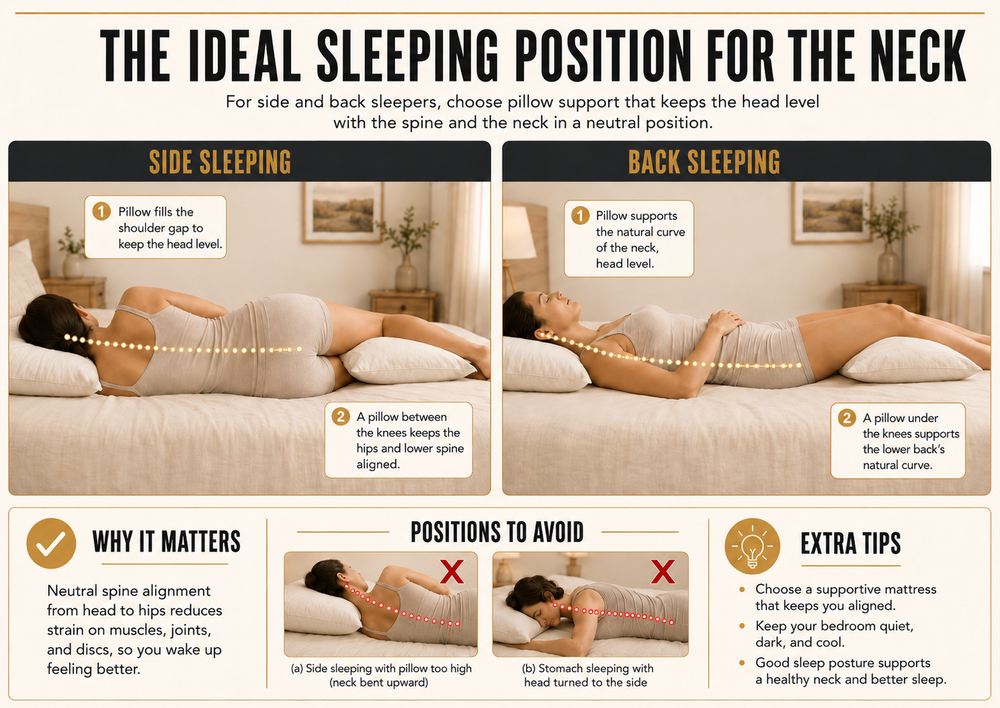
Neck Pain and Sleep: Pillows, Positions, and the Pain Cycle

Tech Neck: What the Evidence Actually Says About Posture and Pain

Myofascial Pain and Trigger Points: The Knots in Your Neck

Cervical Radiculopathy: When Neck Pain Travels Down the Arm

Cervical Spondylosis: Understanding the Aging Neck
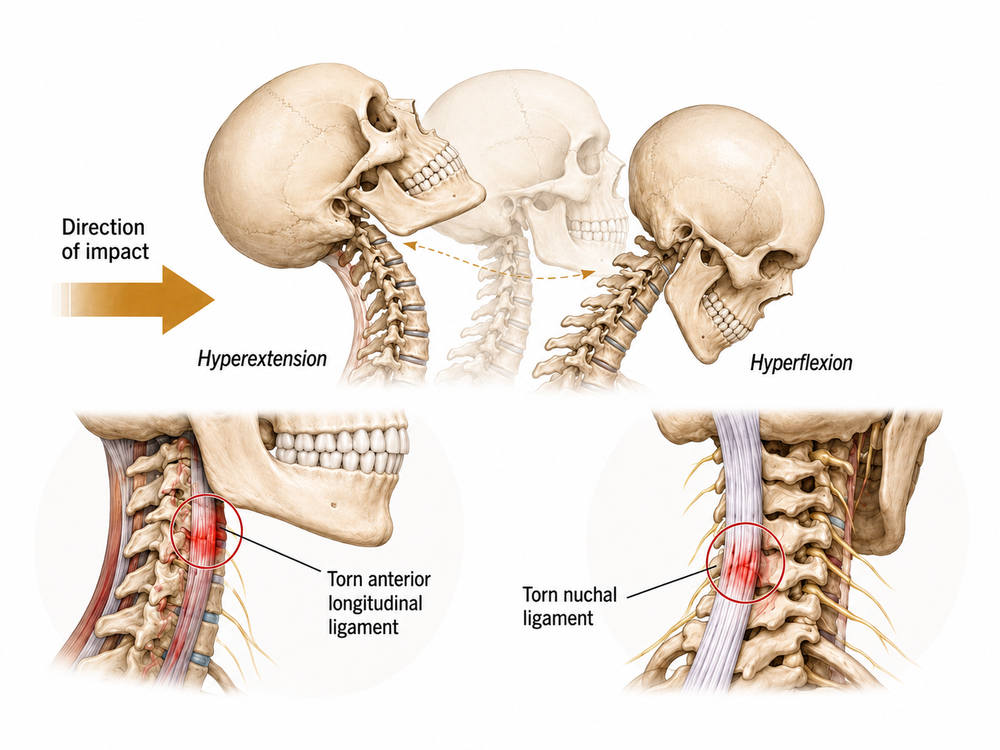
Whiplash and Whiplash Associated Disorder (WAD)

Why Is Neck Pain Such a Pain in the Neck?
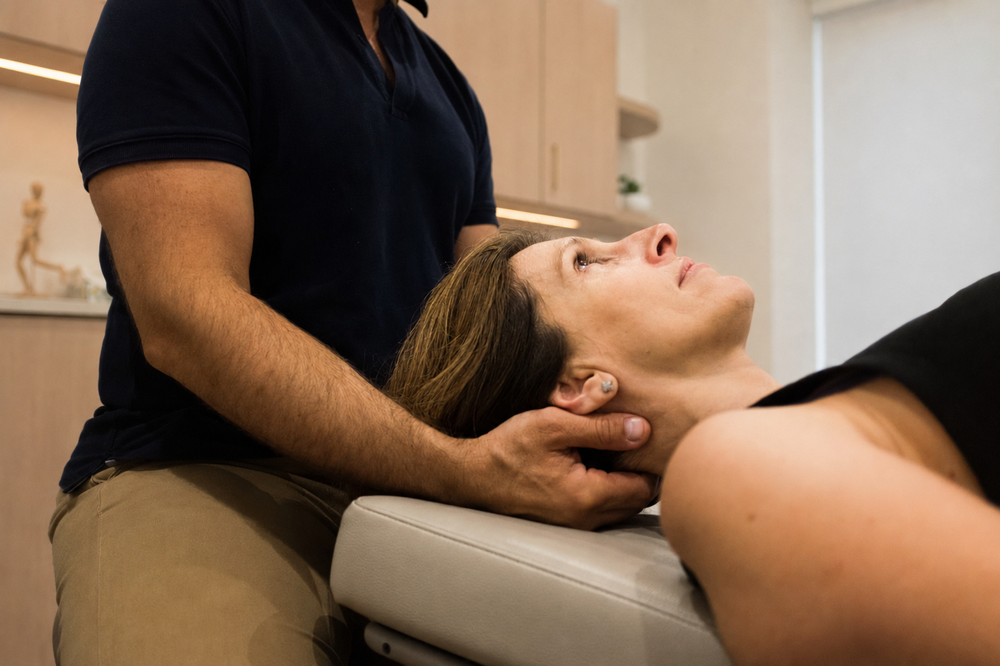
Mechanical Neck Pain: The Most Common Neck Pain, Explained
Common causes and typical symptoms
Common causes and triggers
- Poor or sustained posture from desk work, devices, or driving
- Sudden trauma such as a collision, fall, or sports injury
- Repetitive strain or prolonged static positions
- Muscle tension related to stress or fatigue
- Joint restriction in the cervical or upper thoracic spine
- Disc irritation or degenerative changes
- Previous injuries that never fully resolved
- Sleep position or inadequate pillow support
Typical signs and symptoms
- Neck stiffness or reduced range of motion
- Localized pain or aching in the neck
- Pain radiating into the shoulders, upper back, or arms
- Headaches that originate from the neck
- Muscle tightness or spasm
- Heaviness, fatigue, or instability in the neck
- Tingling or numbness in the arms or hands, in some cases
A thorough assessment that looks beyond symptoms
Evaluation may include a detailed history, movement and posture analysis, joint and soft tissue assessment, and neurological screening when appropriate. Care is individualized and focused on reducing irritation, restoring movement, improving tissue tolerance, and supporting long-term neck resilience. Therapies that may form part of your plan include:
What keeps neck pain from coming back is restoring control
Hands-on care settles the irritation. A structured, four-phase program wakes the deep stabilizers, rebuilds range, and retrains how your head balances on your neck. You can begin the first phase at home today, at no cost.
Phase 1
Six gentle movements to calm the system and activate the deep stabilizers. Open and ready to follow now.
Start Phase 1Phase 1 Booklet
The full Phase 1 program as a downloadable booklet, with a quick safety self-check. Sent to your inbox.
Get the bookletThe Full Program
All four phases, matched to your neck after an assessment, with hands-on care. The complete, personalized plan.
Book an assessmentA quick safety note
The program is built for common, mechanical neck stiffness and soreness. If your neck pain follows a significant injury, or comes with arm pain, numbness, weakness, dizziness, or trouble with balance or swallowing, do not start these exercises. Let us assess you first and point you to the right starting place.
Not sure where to start?
Prompt assessment is encouraged if neck pain is persistent, worsening, interfering with daily activities, or coming with arm pain, numbness, or frequent headaches. An assessment is the best first step, and we will give you a clear, honest picture of what is going on and what to do next.
Book an assessment