

Fascial Distortion Model
Precise Approach to Pain and Movement

The Fascial Distortion Model (FDM) is a hands-on clinical approach that focuses on specific alterations in the body’s fascial system that contribute to pain, restricted movement, and altered function. Rather than treating symptoms in a generalized way, FDM is based on identifying distinct fascial distortions and correcting them directly.
This method is particularly effective for musculoskeletal pain that feels sharp, pulling, burning, or deeply localized, as well as for movement limitations that do not respond well to conventional care alone. Treatment is targeted, purposeful, and guided by how your body presents, not by a preset protocol.
Understanding Fascia and Why It Matters
Fascia is the connective tissue network that surrounds, supports, and integrates muscles, joints, nerves, and organs. It plays a critical role in force transmission, proprioception, and coordinated movement. When fascia is disrupted through injury, repetitive strain, surgery, or sustained stress, it can alter how tissues glide, load, and communicate.
These distortions can persist even after the initial injury has healed, contributing to lingering pain, stiffness, or a sense that something “just isn’t moving right.” Addressing fascial dysfunction directly can restore more normal tissue behaviour and improve overall movement quality.

Clinical Assessment Using the Fascial Distortion Model
One of the defining features of FDM is how assessment is performed. Patients often describe their pain using consistent hand gestures, movements, or specific language patterns. These presentations help identify the type and location of fascial distortion involved.
Assessment includes:
Observing how you describe and demonstrate your pain
Evaluating movement patterns and restrictions
Identifying tissue responses to specific palpation
This process allows care to be directed at the most relevant structures, rather than applying generalized treatment to an entire region.
FDM Treatment Techniques and Tissue-Specific Correction
FDM treatment uses precise manual techniques designed to correct specific fascial distortions. The approach is intentional and localized, aiming to restore tissue glide, tension balance, and normal sensory input.
Treatment may feel intense at times, particularly when addressing longstanding or highly sensitized areas. That said, it is always guided by clinical judgment and patient tolerance. The goal is not force for its own sake, but meaningful change in tissue behavior and function.
Sessions are often integrated with movement guidance and complementary therapies to support lasting results.
Conditions Commonly Treated With FDM
FDM can be helpful for a wide range of musculoskeletal complaints, particularly when pain is persistent, movement feels restricted, or progress has plateaued. It is commonly used for:
Acute or chronic joint pain
Sports and overuse injuries
Post-surgical stiffness or scar-related restriction
Recurrent strains and “nagging” pain patterns
Limited range of motion without clear structural damage
Care is individualized, and FDM is often combined with rehabilitation, exercise, or other therapies based on your needs and goals.

Integrating FDM Into a Complete Care Plan
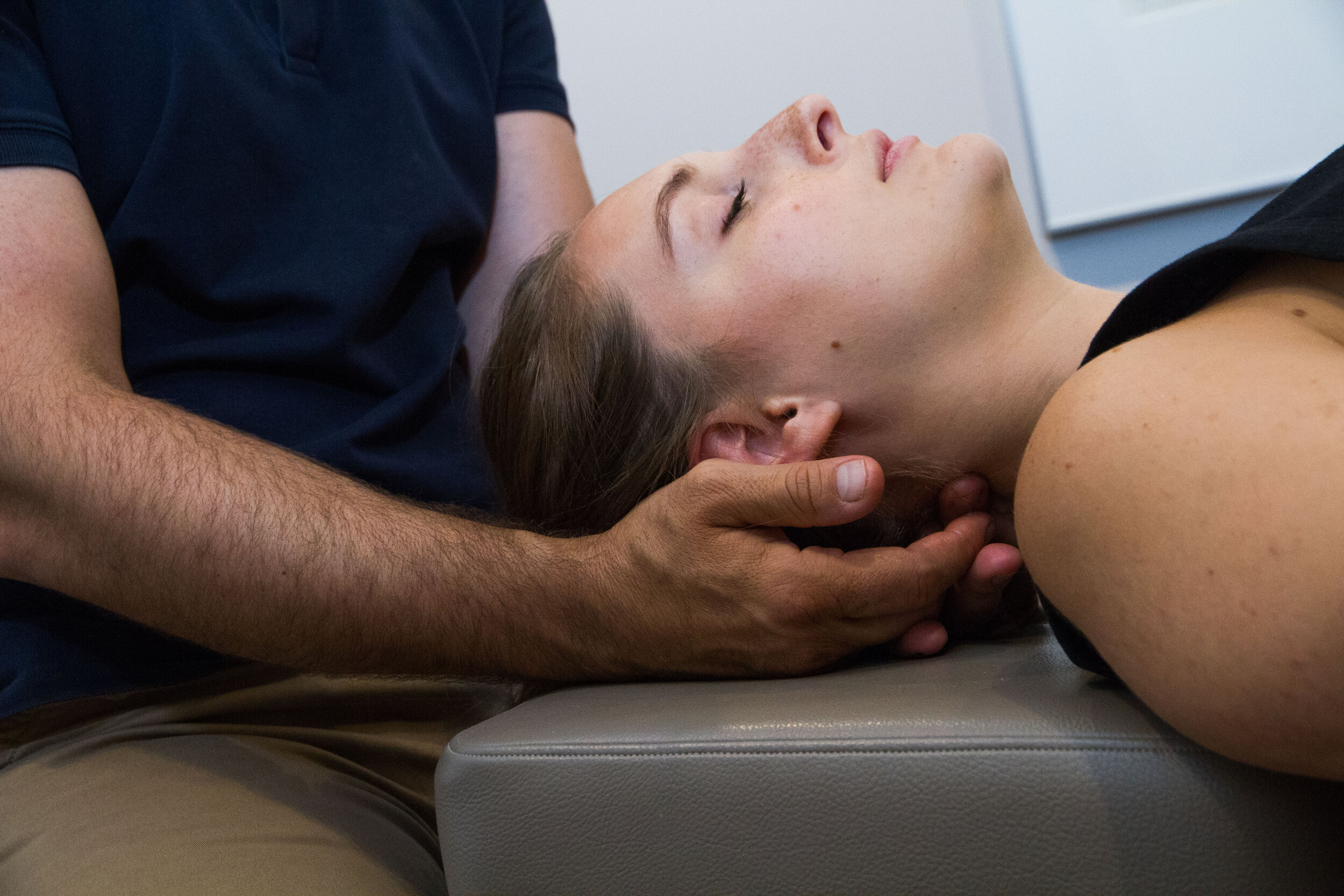
While FDM can produce meaningful changes on its own, it is most effective when integrated into a broader care strategy. Addressing how tissues load, recover, and adapt over time helps reinforce treatment effects and reduce recurrence.
At ONE80 Health, FDM is used as part of a comprehensive, goal-driven approach, helping patients move more confidently, reduce pain sensitivity, and return to daily and athletic activities with greater resilience.
The Six Types of Fascial Distortions
1. Triggerbands
Twisted or wrinkled fascial fibers that run along linear pathways. Patients often describe a burning or pulling pain and gesture with sweeping motions. Triggerbands are common after repetitive strain or sprain/strain injuries.
2. Continuum Distortions
Occur at the junction between bone and soft tissue, often at ligament or tendon attachment sites. These injuries are exquisitely tender and can lead to bone spurs if untreated. Patients usually point with one finger to the exact painful spot.
3. Cylinder Distortions
Coils of circular fascia that act like a “tourniquet,” restricting motion. These distortions often cause sensations like tingling, numbness, or heaviness that can mimic nerve pain. Patients usually squeeze or grip the affected area repeatedly.
4. Herniated Trigger Points (HTPs)
When tissue normally lying beneath fascia pushes through and gets stuck. These distortions often present as localized aches in the neck, shoulders, abdomen, or buttocks.
5. Folding Distortions
Caused by severe compression or traction forces around a joint, reducing the fascia’s ability to absorb load and protect against further injury. They can feel like a deep joint pain and are divided into:
Unfolding injuries: from twisting and pulling forces
Refolding injuries: from compression or jamming forces
6. Tectonic Fixations
When fascial surfaces lose their natural ability to glide, similar to geological plates stuck together. This limits joint motion and contributes to stiffness, pain, and reduced mobility.
FAQs
-
Individualized treatment: FDM allows practitioners to directly address specific distortions in the fascia that lead to pain and dysfunction, offering a highly personalized treatment approach tailored to each patient's needs.
Relief from Pain: By accurately recognizing and treating the distortions, FDM can provide significant pain relief. It offers a solution to common conditions such as sports injuries and chronic pain, enabling patients to live a more comfortable life.
Improved Mobility and Flexibility: Using deep tissue manipulation, pressure application, and stretching, FDM works to realign the fascia. This process results in improved flexibility and enhanced range of motion in afflicted individuals.
Use of Patient Feedback: FDM places a strong emphasis on patient feedback during identification and treatment of distortions. It uses patients' descriptions of pain and body language as an integral part of the diagnostic process. This patient-centered approach leads to more precise treatment and better overall results.
Comprehensive Approach: With its focus on understanding and targeting fascial distortions, FDM takes a comprehensive approach to alleviating musculoskeletal pain. It leads to the restoration of function and improved quality of life for many patients.
-
-
The Fascial Distortion Model is based on identifying specific, repeatable patterns of fascial dysfunction and addressing them directly. Rather than applying generalized soft-tissue techniques, FDM uses a structured assessment process to determine the type and location of fascial distortion contributing to pain or movement restriction. This allows treatment to be targeted and condition-specific rather than protocol-based.
-
Some FDM techniques can feel intense, particularly when treating longstanding or highly sensitized tissue. Sensation varies depending on the type of fascial distortion being addressed and the individual’s tissue tolerance. Treatment is always guided by clinical judgment and patient feedback, and intensity is adjusted as needed to ensure it remains appropriate and purposeful.
-
The number of sessions varies depending on the nature, duration, and complexity of the condition being treated. Some patients notice meaningful changes after one or two sessions, while others require a series of treatments combined with rehabilitation or movement-based care. Recommendations are made on a case-by-case basis following assessment.