
Custom Orthotics
Precision Support for the Way You Move
Custom orthotics are medical devices designed to optimize foot mechanics, reduce strain throughout the body, and improve how you move, stand, and recover, every step of the day.
Your Feet Are the Foundation of Your Entire Body
Every step you take sends forces upward through your ankles, knees, hips, pelvis, and spine. When foot mechanics are inefficient whether due to over-pronation, poor shock absorption, or asymmetrical loading, the body compensates. Over time, these compensations can contribute to pain, fatigue, instability, and repetitive strain injuries far beyond the feet themselves.
Custom orthotics are not about “arch support.” They are about restoring efficient load transfer, improving alignment, and reducing unnecessary stress on joints, muscles, and connective tissue during daily movement.
Custom Means Designed for Your Body, Not the Average Foot
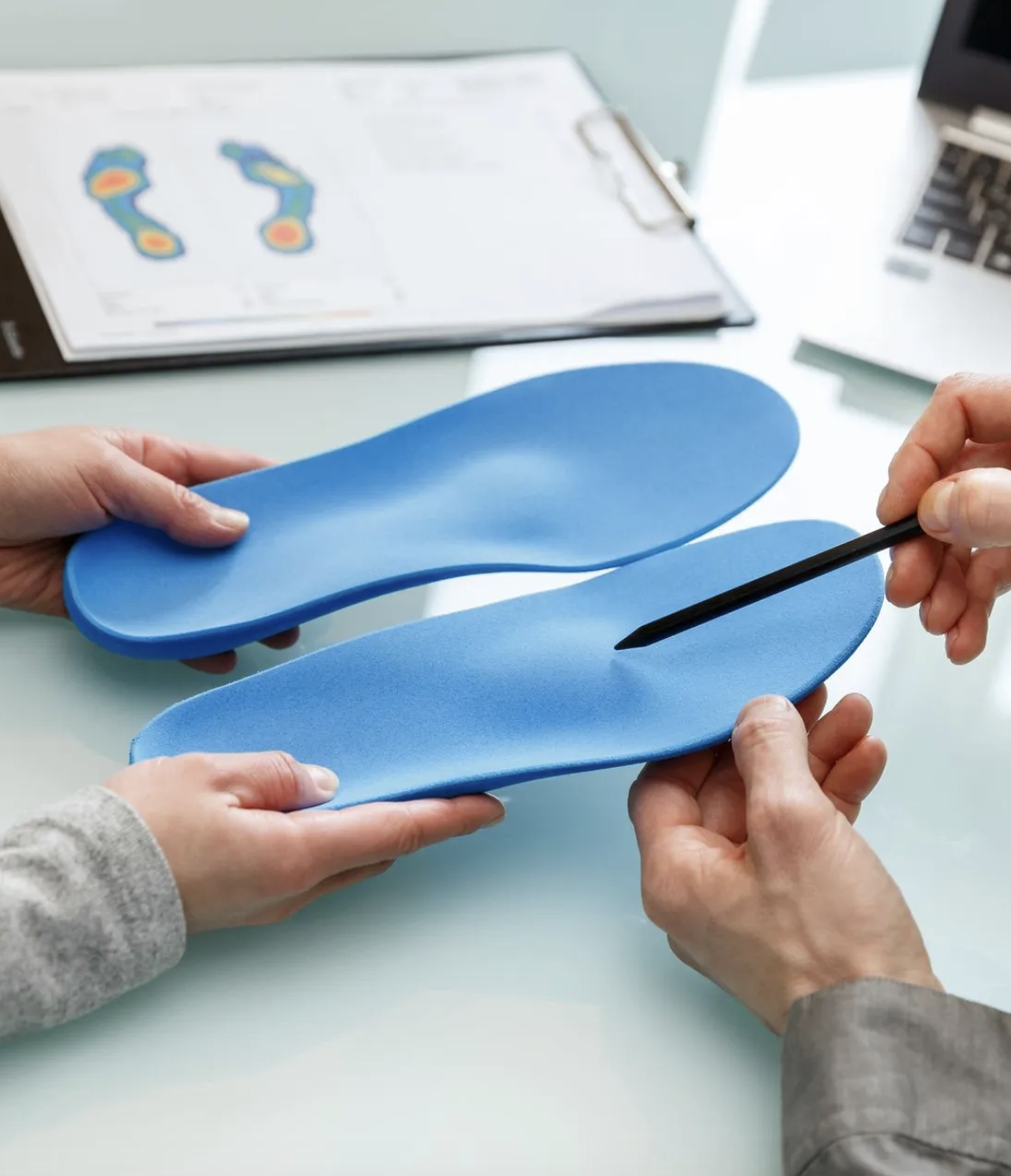
Unlike over-the-counter inserts, custom orthotics are designed specifically for your foot structure, movement patterns, and activity demands. They are prescribed after a detailed assessment that considers how you stand, walk, load, and adapt to movement, not just how your feet look at rest.
This individualized approach allows orthotics to provide targeted support where needed, while still allowing natural motion where appropriate. The result is improved efficiency, comfort, and durability under real-world conditions.
A Clinical Evaluation That Goes Beyond Your Feet
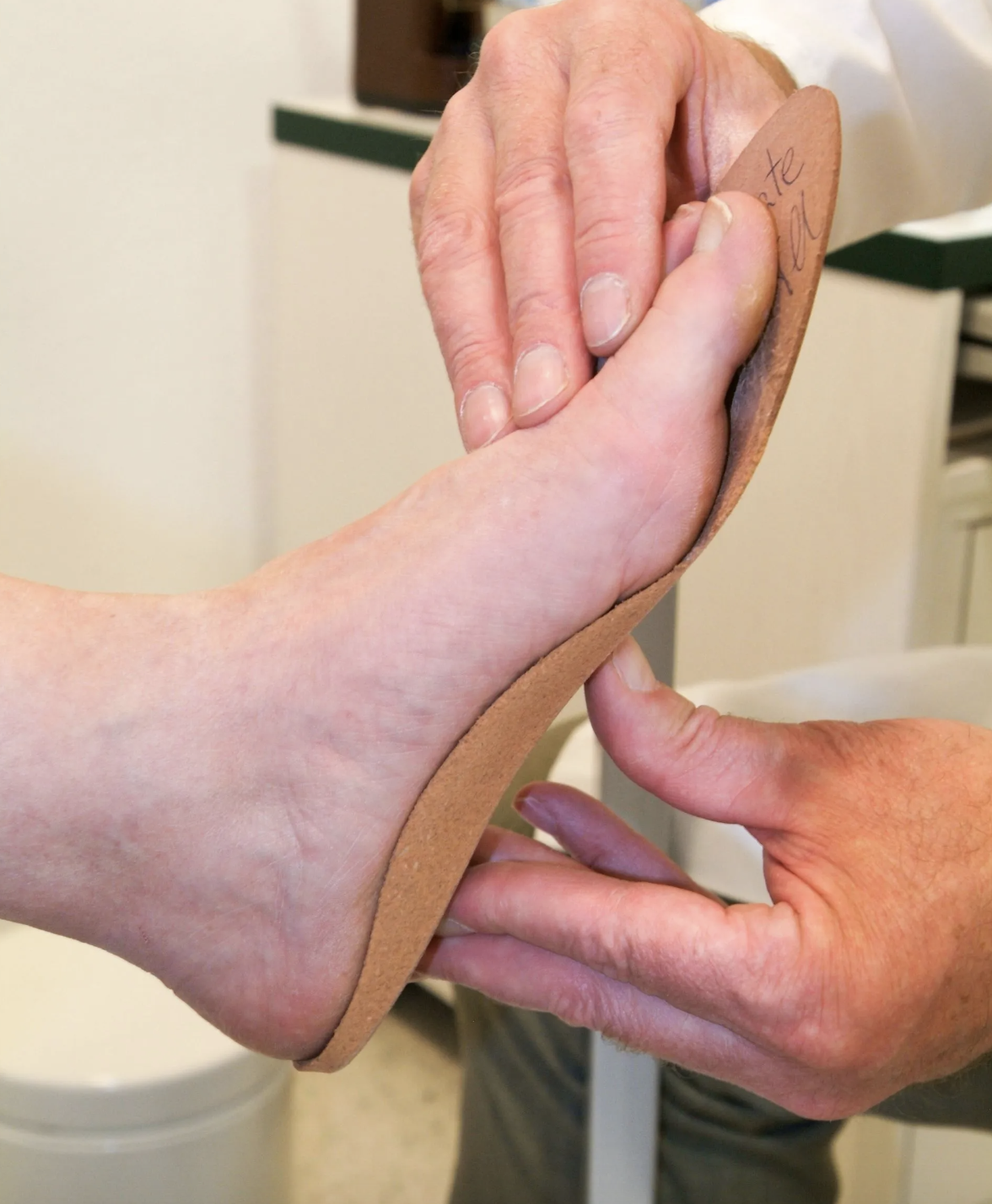
Our orthotics process begins with a comprehensive biomechanical assessment. This includes evaluating foot structure, gait mechanics, joint mobility, muscle function, posture, and how forces are managed during movement.
We look at how your feet interact with the ground and how those forces influence the rest of your body. This ensures that your orthotics are not just comfortable but functionally appropriate for your specific needs, whether that includes walking, standing, training, or sport.
When Custom Orthotics Are Most Helpful
Custom orthotics may be recommended for a wide range of concerns, including foot pain, plantar heel pain, Achilles irritation, shin discomfort, knee or hip pain, and lower back strain. They are also commonly used to address fatigue with standing or walking, recurrent injuries, or asymmetrical movement patterns.
Beyond pain relief, orthotics can play a role in improving movement efficiency, reducing cumulative stress during activity, and supporting long-term joint health especially for individuals who are active, on their feet all day, or recovering from injury.
Orthotics That Integrate Into How You Actually Live
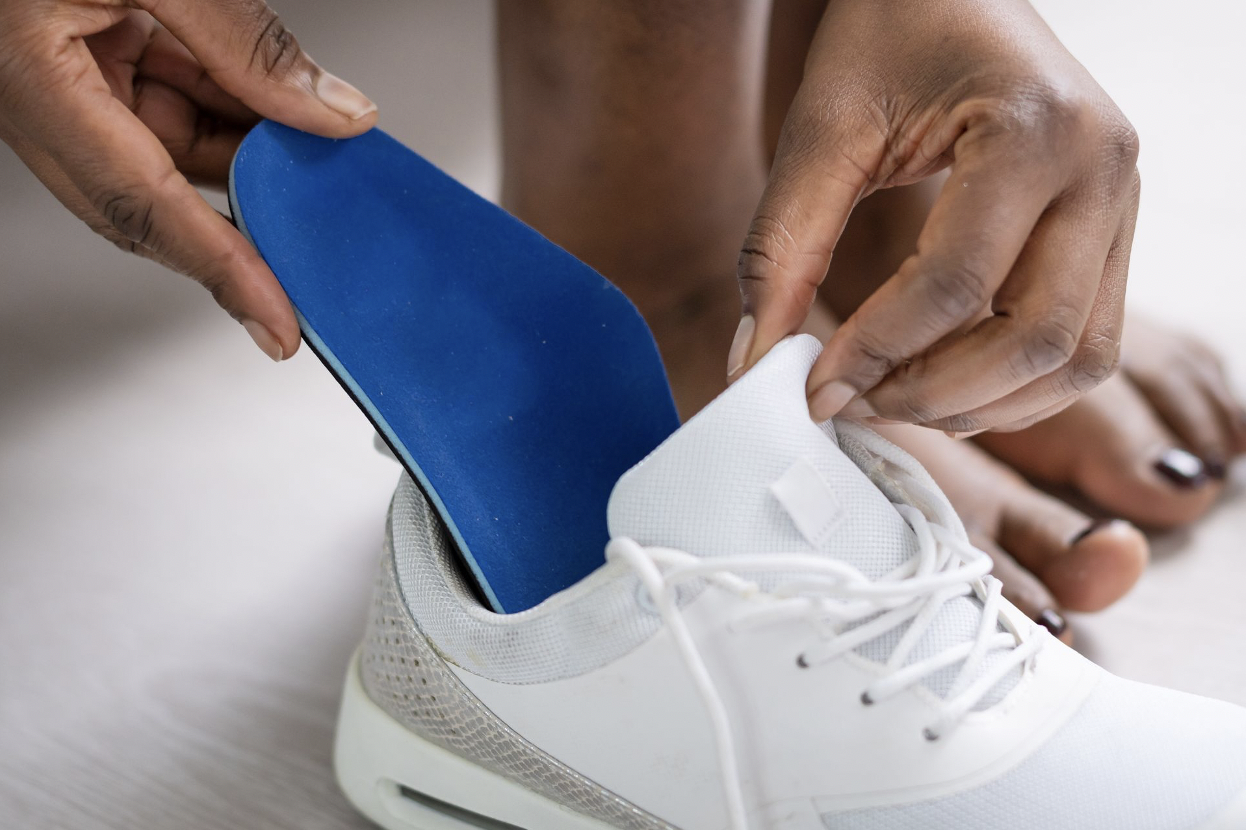
Custom orthotics are designed to fit your footwear and your lifestyle. Whether you spend long hours standing, walk extensively during the day, train regularly, or participate in sport, your orthotics are built to support those demands without feeling intrusive or restrictive.
Materials, rigidity, and design features are selected to balance support, durability, and comfort so your orthotics enhance movement rather than limit it.
Advanced 3D Scanning Technology
At ONE80 Health, we use the latest 3D foot scanning technology to capture every detail of your foot structure with remarkable accuracy. This allows us to design an orthotic that fits seamlessly and works precisely with your biomechanics—improving comfort, function, and performance.
Common Issues Caused by Foot Misalignment
Over-Pronation (Flat Feet)
When the arches collapse inward, it can lead to:
Plantar fasciitis & heel pain
Bunions & neuromas
Shin splints & tibial stress fractures
Knee misalignment & patellofemoral pain
Achilles & tibialis posterior tendon issues
Over-Supination (High Arches)
When the arches remain too high and rigid, it can cause:
Poor shock absorption & frequent ankle sprains
Stress fractures of the tibia, fibula, or metatarsals
Heel and forefoot pain
Limited mobility and reduced performance
Left untreated, these imbalances may contribute to chronic pain, inflammation, joint wear, and long-term degeneration. Custom orthotics help correct these patterns and protect your body from further strain.
Support That Works Best When Integrated, Not Isolated
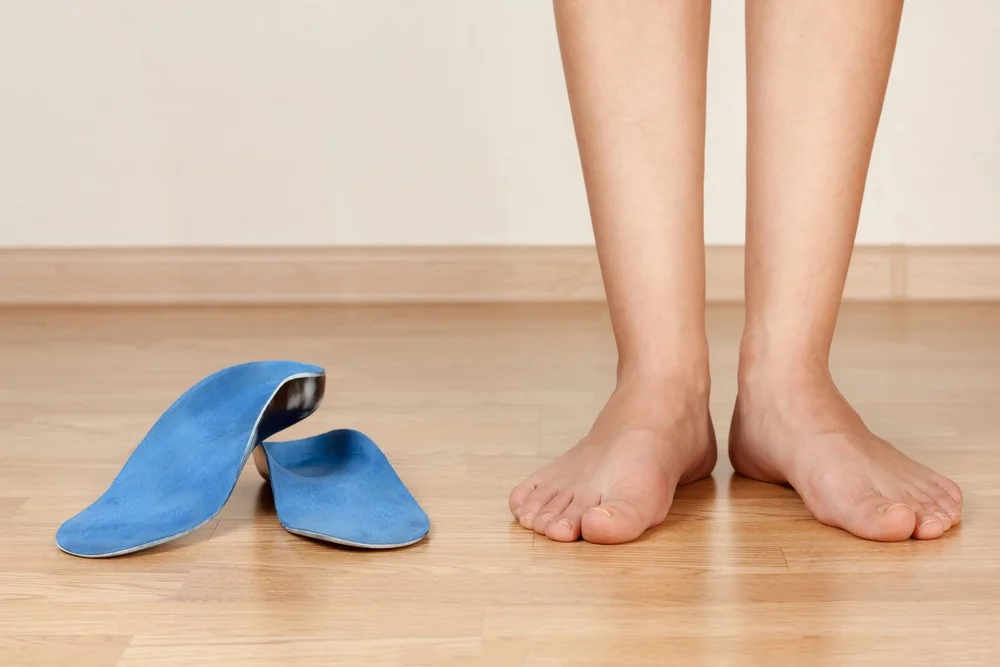
Orthotics are most effective when used as part of a broader care strategy. They can help reduce strain and improve mechanics, but lasting results often come from pairing them with targeted care such as manual therapy, rehabilitation, movement retraining, and recovery-focused interventions.
Our goal is not dependency on devices, but smarter support that helps your body move more efficiently while addressing the underlying contributors to pain or dysfunction.
A Guided Adaptation Process for Long-Term Results
Once your custom orthotics are ready, we guide you through a structured break-in period to allow your body to adapt gradually. Follow-up visits ensure proper fit, comfort, and function, with adjustments made as needed.
As your movement patterns improve or your activity levels change, orthotics can be reassessed and refined ensuring they continue to serve your body, not limit it.
FAQs
-
-
-
Most people adapt within 1–3 weeks. A gradual break-in period allows your body to adjust as movement patterns change. Mild fatigue or awareness in the feet, legs, or hips can occur initially and is typically temporary. We provide clear guidance and follow-up to ensure a smooth transition.
-
-
Not necessarily. Orthotics are a tool, not a lifetime sentence. Some people benefit from long-term use, while others use them temporarily alongside rehabilitation, movement retraining, or recovery-focused care. Recommendations are individualized and revisited over time based on your progress and goals.