Mechanical Neck Pain: The Most Common Neck Pain, Explained
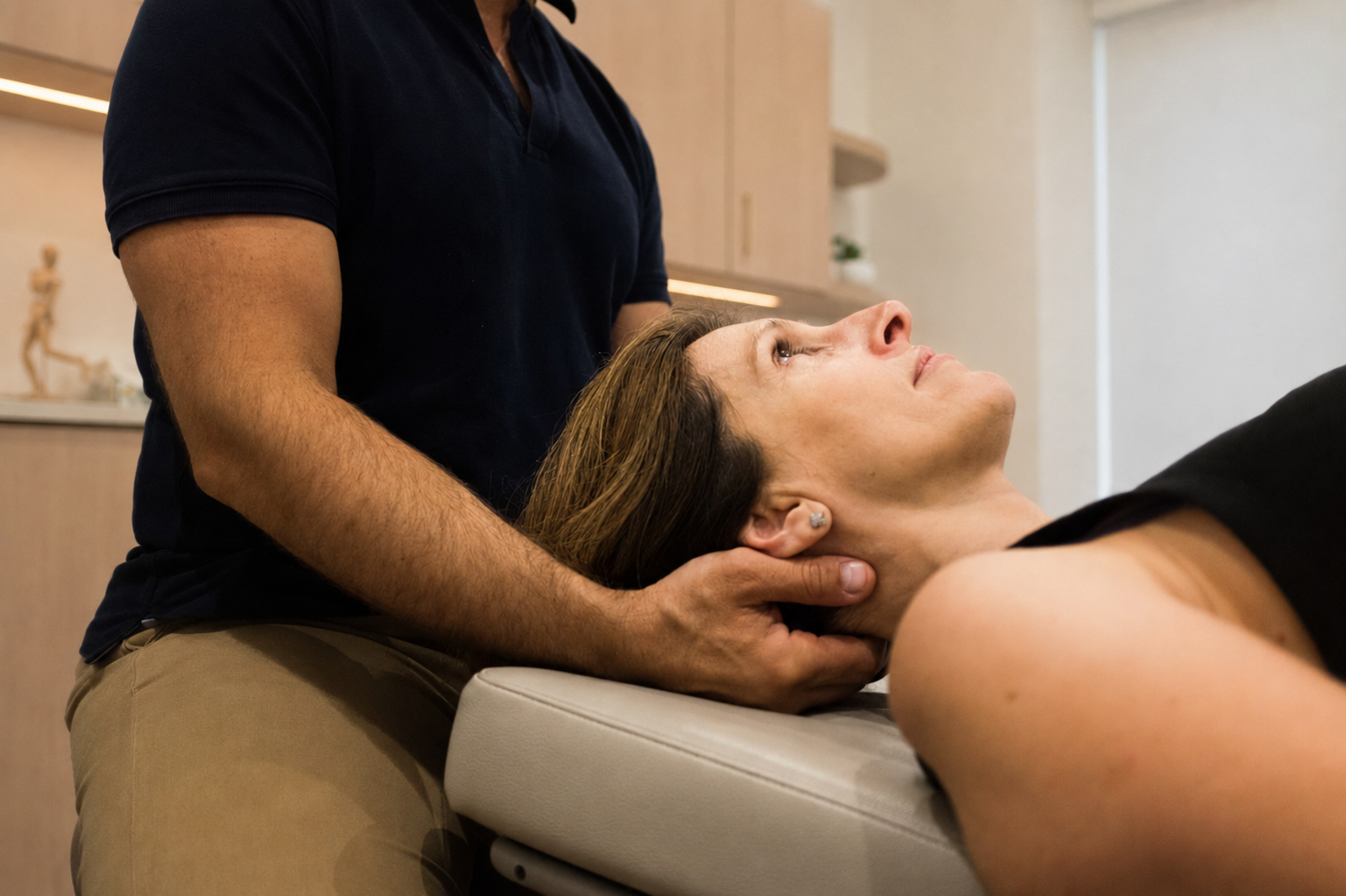
If you have neck pain, the odds are very high that it is this kind. Mechanical neck pain, sometimes called simple or non-specific neck pain, is by far the most common neck complaint, and it is also the most treatable. The word "mechanical" is the reassuring part: it tells you the pain is coming from the ordinary moving parts of the neck, the muscles, fascia, ligaments, and joints, rather than from anything sinister.
Some of the usual contributors are minor strains of the muscles and fascia, irritation of the small joints of the neck, and, very commonly, sustained positions without enough movement variability. A neck held in one position for hours puts steady load on the same structures, which is why this pain is so common in people who spend the working day at a desk. Over time that low-grade demand can exceed what the tissue is prepared to tolerate.
What Are the Symptoms?
Mechanical neck pain has a fairly recognizable pattern:
- Restricted movement and pain in the neck, often spreading to the base of the skull or across the shoulders. This is the core complaint.
- Movement that feels guarded, where certain directions clearly make the pain worse and you find yourself turning your whole body instead of your head.
- Sometimes, mild referral down the arm. Pain or light tingling can spread toward the hand from irritation of a nerve in the neck. With mechanical neck pain this is mild and, crucially, is not paired with true weakness.
A little referred tingling can happen with ordinary mechanical neck pain. What separates it from cervical radiculopathy is a clearer neurological pattern: persistent numbness, symptoms following a nerve-root distribution, loss of strength, or clumsiness in the hand. Mild, short-lived pins and needles without weakness can still occur with mechanical pain, but worsening neurological symptoms deserve prompt assessment.
What Is the Outlook?
Good, in most cases of sudden-onset neck pain. Symptoms usually start to improve within a few days, although the exact timeline depends on the person and their history. As a simple rule, if it has not begun to settle after a few days, have it looked at.
In some people the pain becomes chronic or recurrent, coming and going with flares during stressful periods. Those flares are usually about sustained positions, deconditioning, stress, and load rather than ongoing damage. This is exactly where an active rehabilitation approach earns its place, because exercise is one of the most reliably effective treatments for mechanical neck pain.[2][6] Our neck mobilization and stability program is built for precisely this situation.
How Can I Tell If It Is Something More Serious?
A thorough assessment is what separates ordinary mechanical neck pain from the rare serious cause. The features below are the ones that warrant prompt attention rather than watchful waiting.
See someone promptly if:
- The pain is getting progressively worse, with or without treatment
- You develop numbness or tingling in the arm, or weakness or clumsiness in a hand or arm
- You feel unwell with other symptoms such as unexplained weight loss or fever
- The bones of the neck are distinctly tender, which can point to a bone or joint issue
If any of these are present, do not wait. Have your neck assessed promptly, and treat severe post-injury symptoms as an emergency.
What Are the Treatments?
The aim of care is to restore comfortable, pain-free movement, and then to build the capacity that keeps the pain from returning. Current neck pain guidelines support a combined, active approach.[1][7]
- Position variety and workstation setup. Less about one perfect posture, more about moving often and not locking into a single sustained load.
- Neck stability and strengthening exercises. The long-term game-changer. See the neck mobilization and stability program.
- Hands-on care. Joint manipulation and mobilization, soft tissue and fascial techniques, and medical acupuncture can ease pain and restore motion, creating a window to load and strengthen.[3][4][5]
- A supportive pillow. Unloads a tired neck overnight. Poor sleep increases stress, fatigue, and micro-irritation, so it matters more than people think. More in our neck pain and sleep article.
- Stress management and breathing. Restoring relaxed, diaphragmatic breathing reduces the constant load on the neck's accessory muscles.
- Pain medication, when appropriate. Best discussed with your physician or pharmacist for your situation.
Return to a professional if the pain gets worse, if it persists beyond three to five weeks, or if you start to experience new or worsening numbness, weakness, pins and needles, or symptoms travelling into an arm or hand.
To drive, cycle, or ride a motorcycle safely, you have to be able to check blind spots quickly and comfortably. Avoid driving if your neck movement is too limited to do that safely, or if pain, dizziness, arm symptoms, or medication affects your control.
Most neck pain is mechanical and responds well to the right plan. A focused assessment confirms the type and gets you moving in the right direction quickly. Call the clinic at 647-560-4495.
Book an assessment at ONE80References
- Bier JD, et al. Clinical practice guideline for physical therapy assessment and treatment in patients with nonspecific neck pain. Phys Ther. 2018;98(3):162-171. pubmed.ncbi.nlm.nih.gov/29228289/ ↩
- Gross A, et al. Exercises for mechanical neck disorders. Cochrane Database Syst Rev. 2015;1:CD004250. pubmed.ncbi.nlm.nih.gov/25629215/ ↩
- de Zoete A, et al. Effect of spinal manipulative therapy on chronic neck pain: systematic review and meta-analysis. Pain Physician. 2021. pubmed.ncbi.nlm.nih.gov/33988942/ ↩
- Paolucci T, et al. The efficacy of manual therapy and therapeutic exercise for reducing chronic non-specific neck pain: a systematic review and meta-analysis. J Back Musculoskelet Rehabil. 2025. pubmed.ncbi.nlm.nih.gov/39973257/ ↩
- Mueller J, et al. Resistance, motor control, and mindfulness-based exercises are effective for treating chronic nonspecific neck pain. J Orthop Sports Phys Ther. 2023;53(8):420-459. pubmed.ncbi.nlm.nih.gov/37339388/ ↩
- de Campos TF, et al. The effects of exercise dosage on neck-related pain and disability: a systematic review with meta-analysis. J Orthop Sports Phys Ther. 2021;51(3):137-149. pubmed.ncbi.nlm.nih.gov/33131392/ ↩
- Wong JJ, et al. Clinical practice guidelines for the management of neck pain (OPTIMa Collaboration). Eur Spine J. 2016;25(7):2000-2022. pubmed.ncbi.nlm.nih.gov/26984876/ ↩