Rotator Cuff Tears: Do You Actually Need Surgery?
This is one of the most common questions we hear in the clinic: my MRI shows a rotator cuff tear, do I need surgery?
The honest answer is, probably not. But it depends, and the decision is more nuanced than the radiology report suggests.
What the Imaging Actually Means
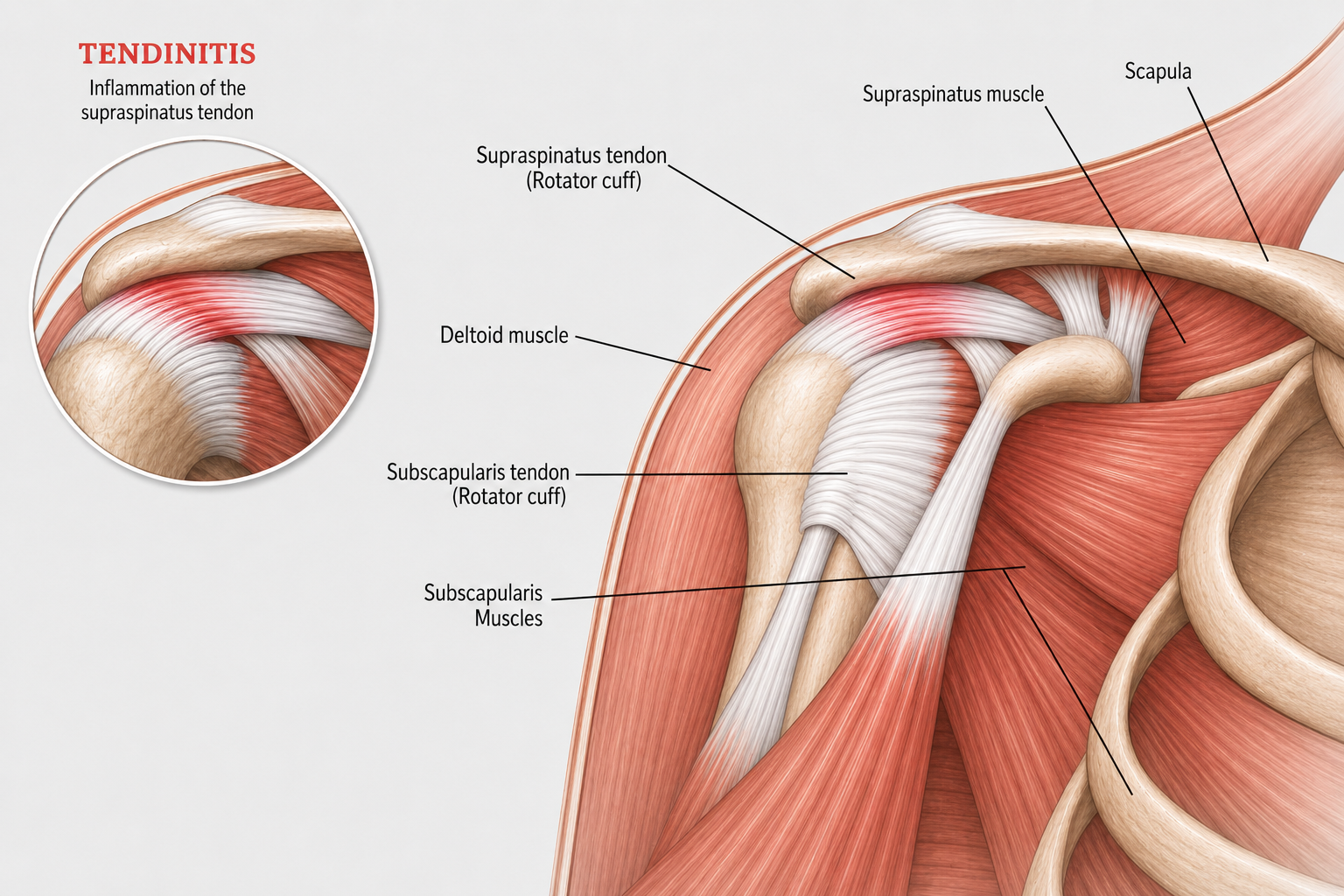
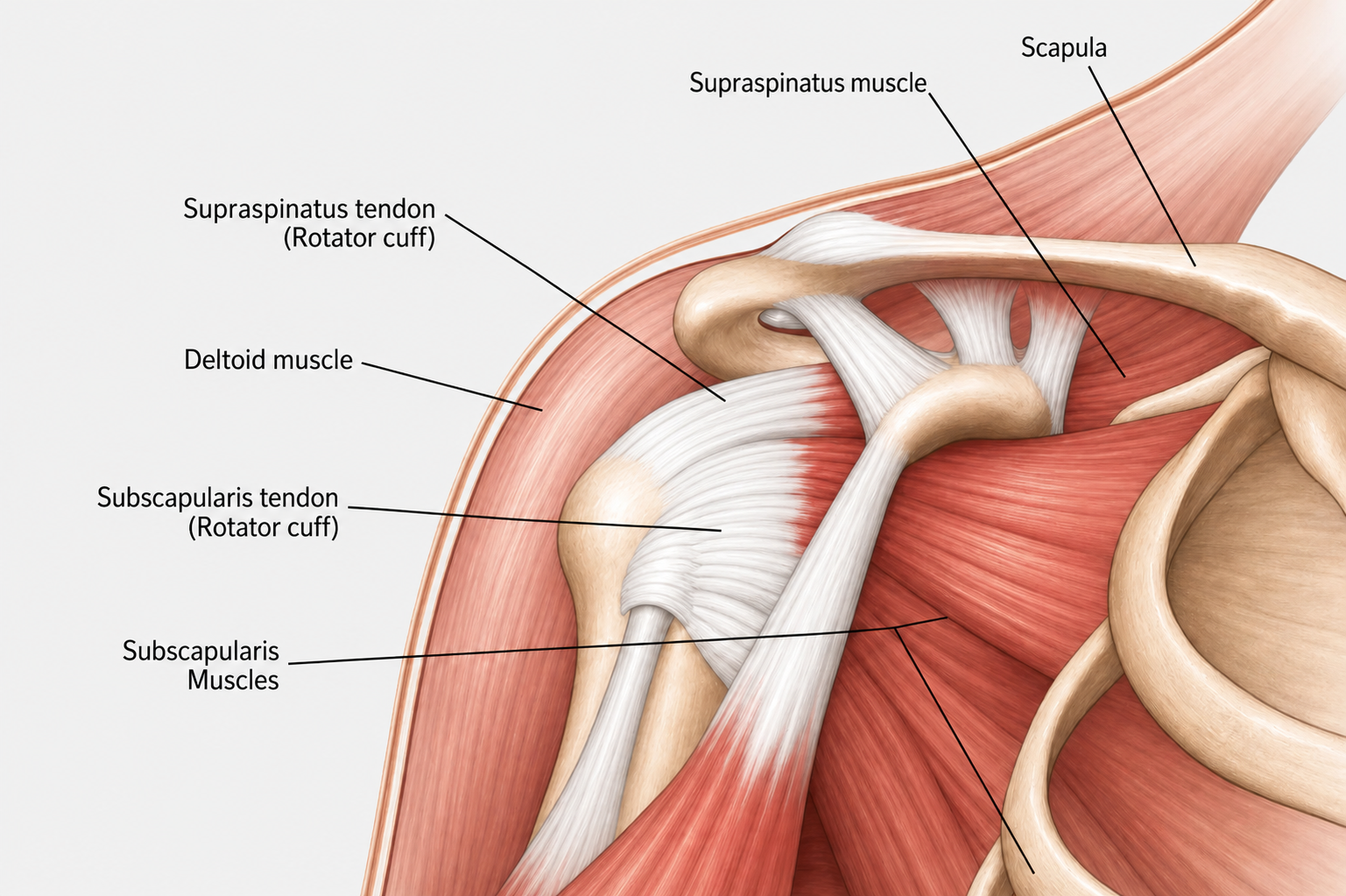
Rotator cuff tears are remarkably common, even in people without pain. Studies of asymptomatic adults show that by age 60, roughly half of us have some form of rotator cuff tear visible on imaging. By age 80, that number climbs higher still. Many of these people have full function and no symptoms. [1]
What this tells us is that a tear on an MRI is not, by itself, a reason to operate. The decision depends on your symptoms, your goals, the type and size of tear, your age, and your activity level.
Partial Versus Full Thickness
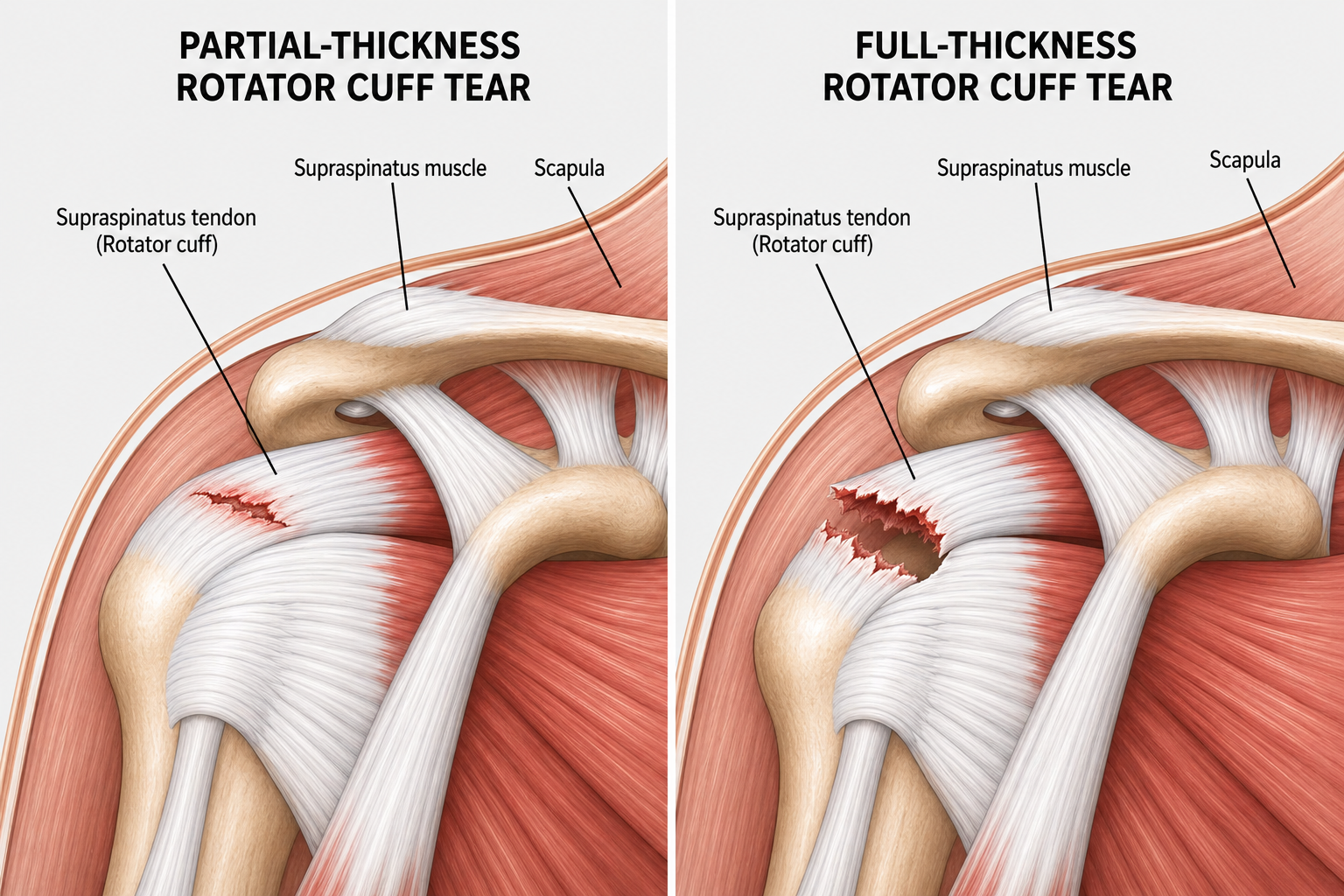
The rotator cuff is a group of four muscles, supraspinatus, infraspinatus, teres minor, and subscapularis, that stabilize the ball of the humerus inside the shallow socket of the scapula. Tears are usually classified as:
Partial thickness, where the tendon is damaged but not completely severed. These often respond well to rehabilitation.
Full thickness, where the tendon is torn through. Even some of these heal with conservative care, although the decision-making becomes more individualized.
The size of the tear, retraction (how far the tendon has pulled back), muscle quality on imaging, the patient's age, and activity level all influence the conversation. [2]
When Conservative Care Is the Right First Step
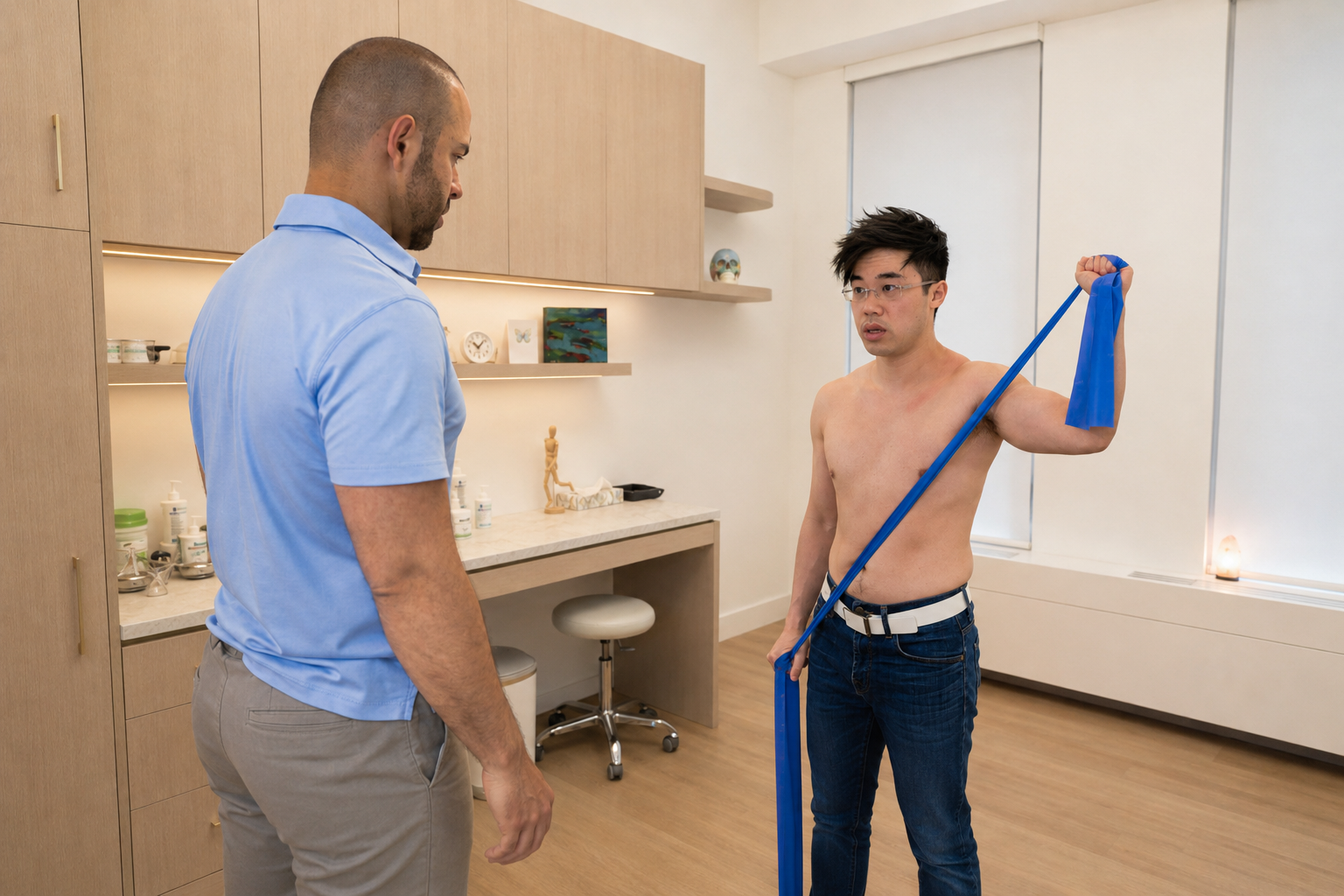
For most patients, the appropriate first move is a structured trial of conservative care. This means:
A targeted rehab program addressing the cuff, the scapular stabilizers, and the thoracic spine. Generic exercises will not get you there.
Manual therapy and soft tissue work to restore mechanics around the joint. [3]
Activity modification, not avoidance, while the tissue settles.
Where appropriate, regenerative options such as PRP (platelet-rich plasma) injections, which have a growing evidence base in select cases. [4]
A genuine conservative trial runs 8 to 12 weeks. The 2025 JOSPT clinical practice guideline on rotator cuff tendinopathy provides the current gold standard for exercise prescription, including load, frequency, progression, and return to activity. [2]
If you have plateaued or worsened despite a well-structured program, surgical consultation becomes a reasonable next step.
When Surgery Makes Sense Earlier
There are scenarios where we will refer for surgical consult sooner rather than later:
Acute, traumatic, full-thickness tears in younger or active patients
Tears that cause significant weakness affecting function, particularly overhead
Failed conservative care after a thorough trial
Subscapularis tears, which often behave differently and may not tolerate delay
What the Evidence on Shoulder Surgery Shows
The CSAW trial, a multi-centre randomized controlled trial across 32 UK hospitals published in the Lancet, compared arthroscopic subacromial decompression to sham surgery for shoulder impingement and found no meaningful difference at 12 months. [5] A subsequent systematic review with meta-analysis confirmed no additional benefit over placebo surgery. [6]
This does not mean surgery is never indicated. It means the bar should be high, and the conservative trial should be real. The current clinical practice guideline emphasizes that even full-thickness tears in lower-demand patients may be appropriately managed without surgery. [2]
What Gets Missed
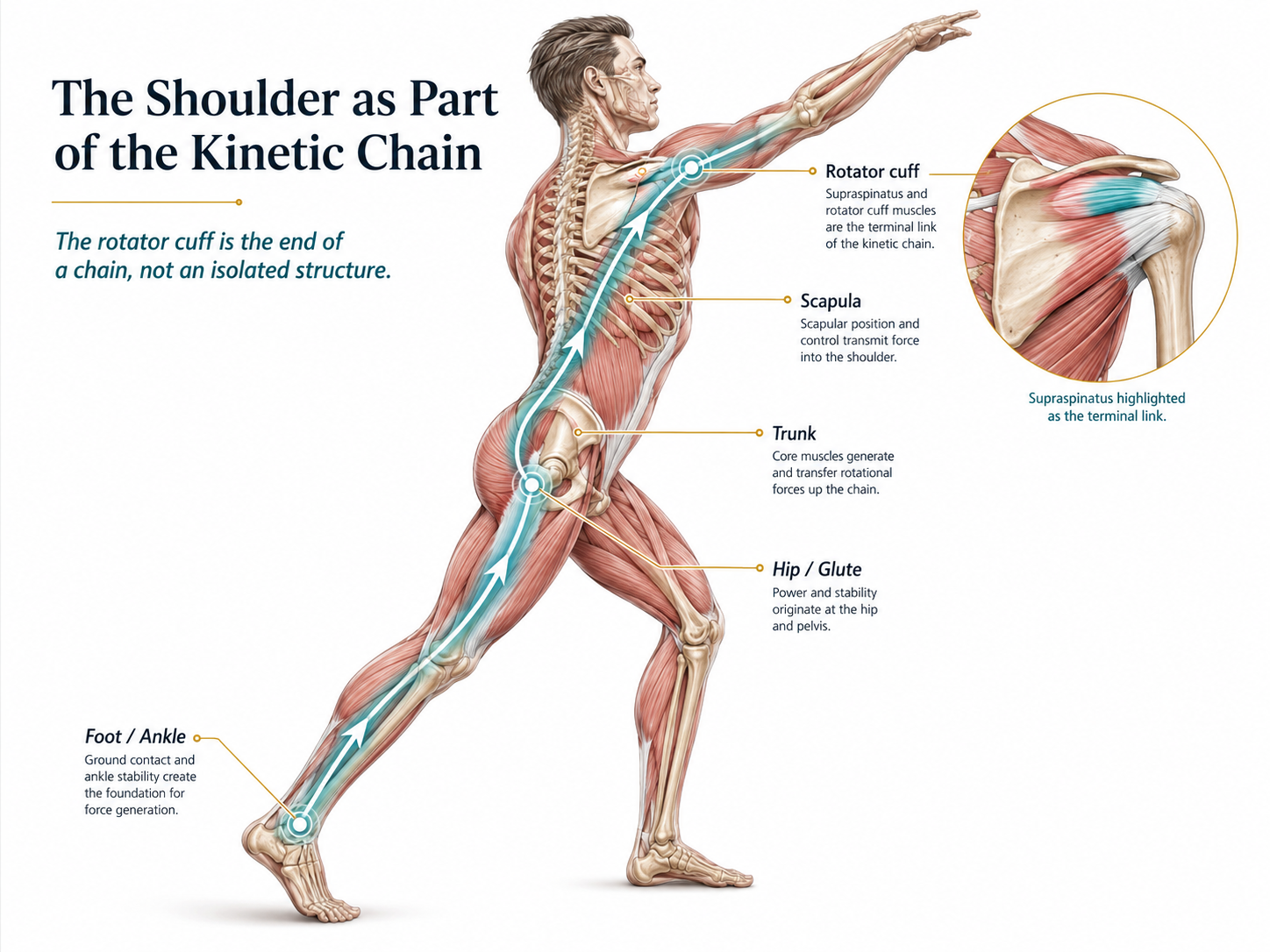
Two things, repeatedly. First, the tear is rarely the whole story. Most rotator cuff pain involves layered issues: scapular control, thoracic mobility, posture, sleep, pain neuroscience. Treating the tear in isolation, surgically or otherwise, often leaves people frustrated.
Second, post-surgical rehabilitation is what determines the outcome more than the procedure itself. We have seen excellent surgeries undermined by inadequate rehab, and we have seen patients with surprising tears thrive without ever entering an operating room.
A note on imaging
Imaging is one input, not a verdict. We assess what the shoulder actually does, what it can tolerate, and what your goals are, then use imaging to inform the picture, not define it.
Nutrition, Sleep, and Tendon Healing
Tendon tissue is poorly vascularized compared to muscle, which is part of why rotator cuff problems heal slowly and why the conditions of recovery matter. A few inputs with reasonable evidence:
Adequate protein intake during recovery
Vitamin C status, since vitamin C is a cofactor for collagen synthesis
Vitamin C-enriched gelatin or collagen peptides taken before loading sessions, which may support tendon remodeling [7, 8]
Sleep, where tissue repair is concentrated
Managing inflammatory drivers like alcohol, ultra-processed foods, and chronic stress
These are not replacements for rehabilitation, they are conditions that determine whether rehabilitation works.
The Real Question
The question is not "do I have a tear" but "what is the best path forward given my goals, my anatomy, and the way my shoulder behaves." Imaging is one input. A careful clinical assessment is the rest.
The ONE80 Approach to Rotator Cuff Conditions
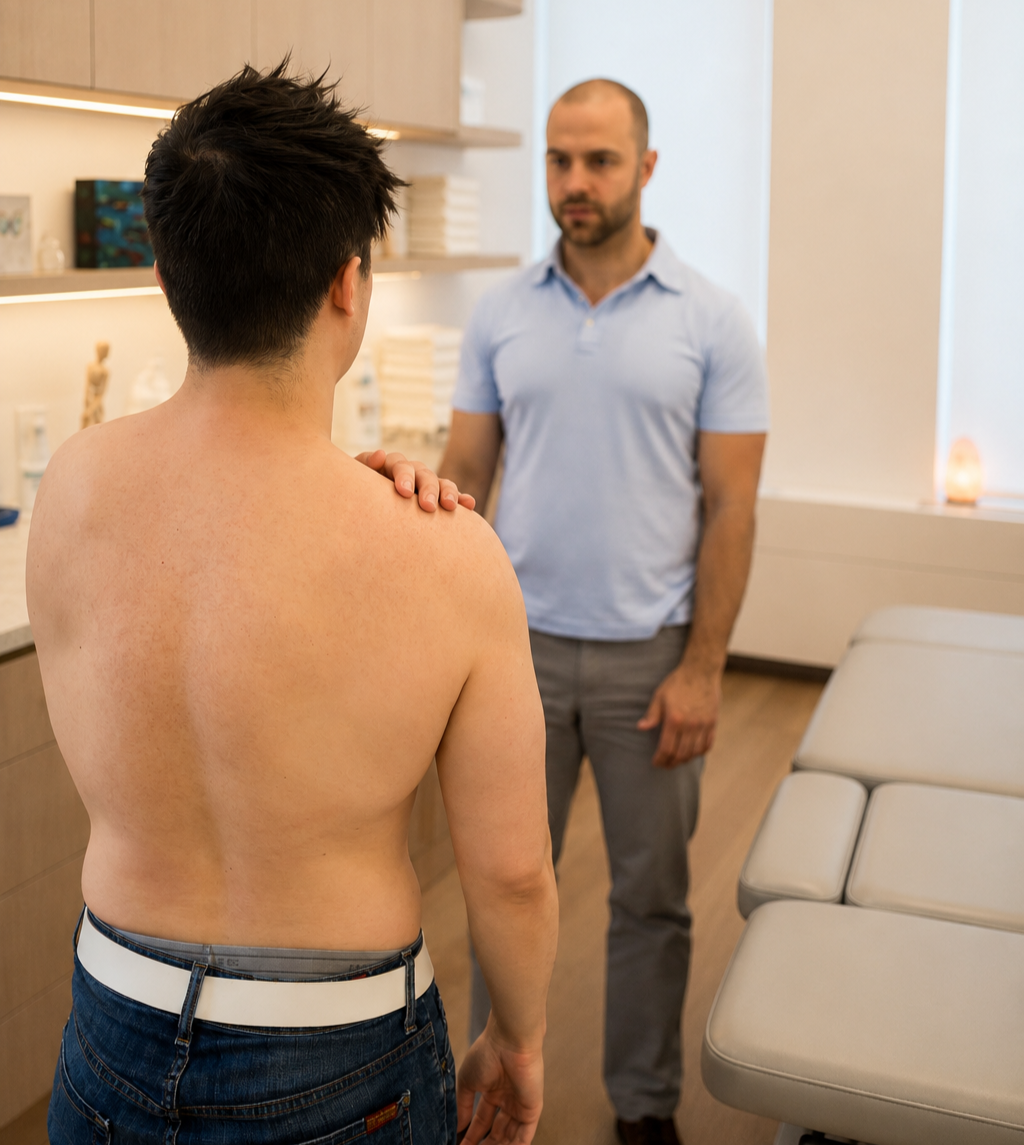
At ONE80 Health, rotator cuff conditions are assessed and treated as a system problem, not just a tendon problem. Our clinical team brings together chiropractic, soft tissue therapy, acupuncture, and structured rehabilitation to address what is actually driving the pain.
Every patient receives a thorough assessment that looks at the cuff, the scapula, the thoracic spine, and the kinetic chain, then matches the treatment to what the shoulder actually needs. Where surgery is the right answer, we work alongside surgical colleagues for the best possible outcome.
Ready to get your shoulder properly assessed?
Same-day and next-day appointments available. We will give you a clear read on whether conservative care is the right path or whether surgical consultation makes sense.
References
All references link directly to PubMed or the publisher source. Inline citation numbers correspond to the bracketed superscripts throughout the post.
[1] Tempelhof S, Rupp S, Seil R. Age-related prevalence of rotator cuff tears in asymptomatic shoulders. J Shoulder Elbow Surg. 1999;8(4):296-9. https://pubmed.ncbi.nlm.nih.gov/10471998/
[2] Beneciuk JM et al. Rotator Cuff Tendinopathy Diagnosis, Nonsurgical Medical Care, and Rehabilitation: A Clinical Practice Guideline. J Orthop Sports Phys Ther. 2025;55(4):235-274. https://www.jospt.org/doi/10.2519/jospt.2025.13182
[3] Liu S et al. Efficacy of manual therapy on shoulder pain and function in patients with rotator cuff injury: A systematic review and meta-analysis. Biomed Rep. 2024;20(6):89. https://pubmed.ncbi.nlm.nih.gov/38682089/
[4] Nazari G et al. Platelet-rich plasma for rotator cuff tendinopathy: A systematic review and meta-analysis. J Hand Ther. 2021. https://pubmed.ncbi.nlm.nih.gov/33970936/
[5] Beard DJ et al. Arthroscopic subacromial decompression for subacromial shoulder pain (CSAW): a multicentre, placebo-controlled, three-group, randomised surgical trial. Lancet. 2018;391(10118):329-338. https://pubmed.ncbi.nlm.nih.gov/29169668/
[6] Karjalainen TV et al. Subacromial decompression surgery for adults with shoulder pain: a systematic review with meta-analysis. Br J Sports Med. 2019;54(11):665-673. https://pubmed.ncbi.nlm.nih.gov/30647053/
[7] Shaw G et al. Vitamin C-enriched gelatin supplementation before intermittent activity augments collagen synthesis. Am J Clin Nutr. 2017;105(1):136-143. https://pubmed.ncbi.nlm.nih.gov/27852613/
[8] Morton RW et al. The effects of collagen peptide supplementation on body composition, collagen synthesis, and recovery from joint injury and exercise: a systematic review. https://pmc.ncbi.nlm.nih.gov/articles/PMC8521576/