
Calm and Activate
Six gentle, evidence-informed movements to settle an irritated neck and switch the deep stabilizing muscles back on. Low effort by design. You should finish each session feeling looser and calmer, never worked.
How this phase works
Most neck pain settles with the right kind of movement, not rest and not force. When a neck has been guarded, stiff, or sore, the small deep muscles that hold your head in place stop doing their job, and the larger surface muscles take over and fatigue. Phase 1 reverses that: it restores comfortable range, settles the breathing pattern, wakes the deep stabilizers, and begins retraining your sense of where your head is in space.
Restore comfortable, confident range
When a neck stops moving freely, it guards. Gentle movement tells the system it is safe to let go.
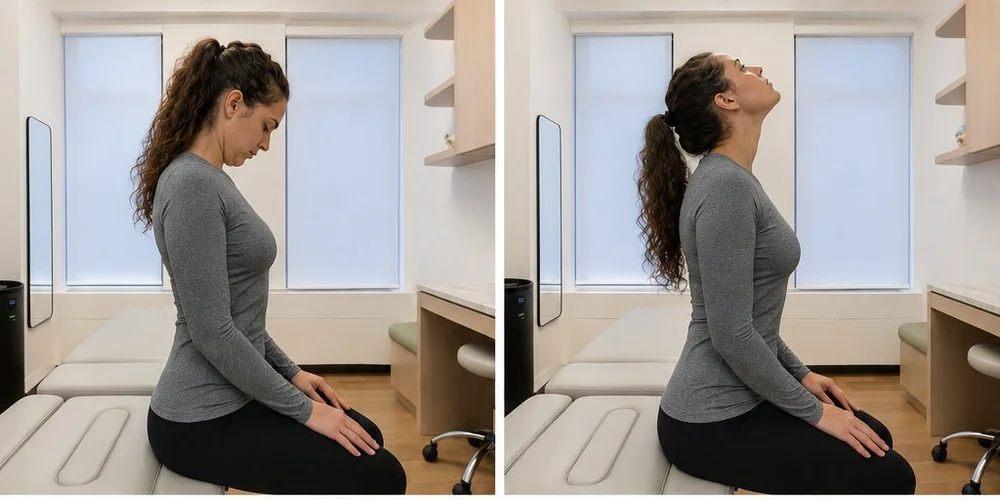
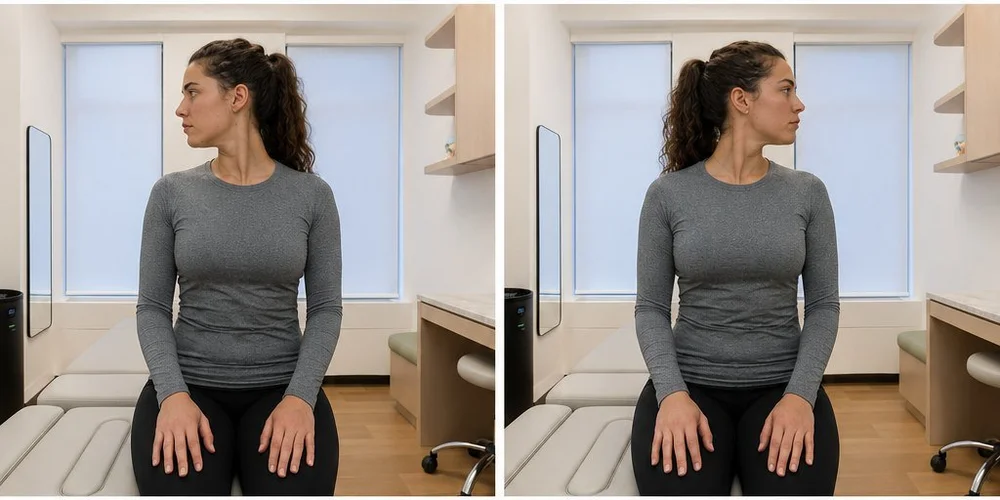
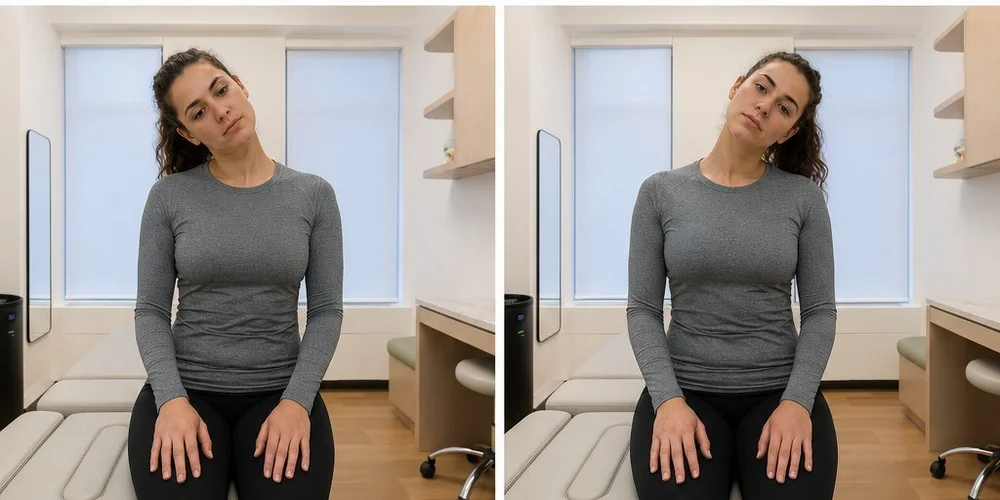
Gentle Neck Range of Motion
- Sitting tall, nod the chin down and lift the gaze up, slow and smooth.
- Turn to look over each shoulder, staying inside a comfortable range.
- Tilt one ear toward the shoulder, then the other. No forcing.
Wake the deep stabilizers
Small, low-effort holds, not hard contractions. Gentle is the point.
Chin Nod
- Make a small, gentle nod, as if saying a quiet yes, drawing the chin in without tipping the head down.
- Place the tongue to the roof of the mouth, mouth closed, and set the shoulder blades gently.
- Lift the head only slightly and build toward a calm, comfortable hold.
Scapular Setting
- Gently draw the shoulder blades down and slightly together, as if settling them into your back pockets.
- Keep it light. The neck and shoulders stay relaxed throughout.
- Release slowly and repeat.
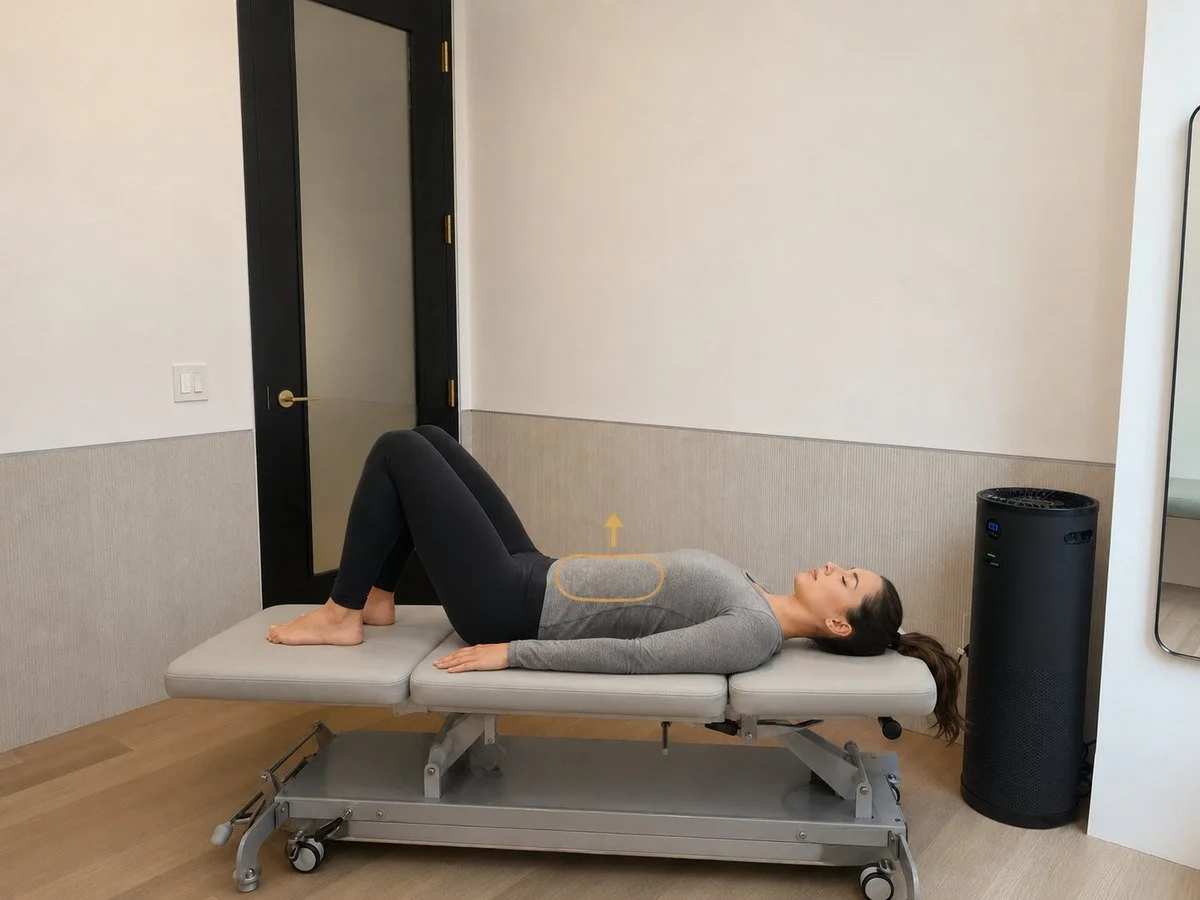
Diaphragmatic Breathing
- Lie on your back, knees bent, one hand resting on the belly if it helps.
- Breathe in slowly through the nose and let the belly rise. Chest and shoulders stay quiet.
- Breathe out slowly and let the belly fall, softening the neck and jaw.
Retrain your sense of head position
After neck pain, your sense of exactly where your head is becomes less precise. This is the part most programs skip, and often the part that makes the difference. These two drills use a small head-mounted laser and the printable targets in the chart pack below. We keep the lasers at the clinic, so just ask and we will set you up. If you prefer to buy your own, an inexpensive clip-on or headband laser pointer from any online store works just as well. Print the chart pack at actual size, 100 percent, before you start.
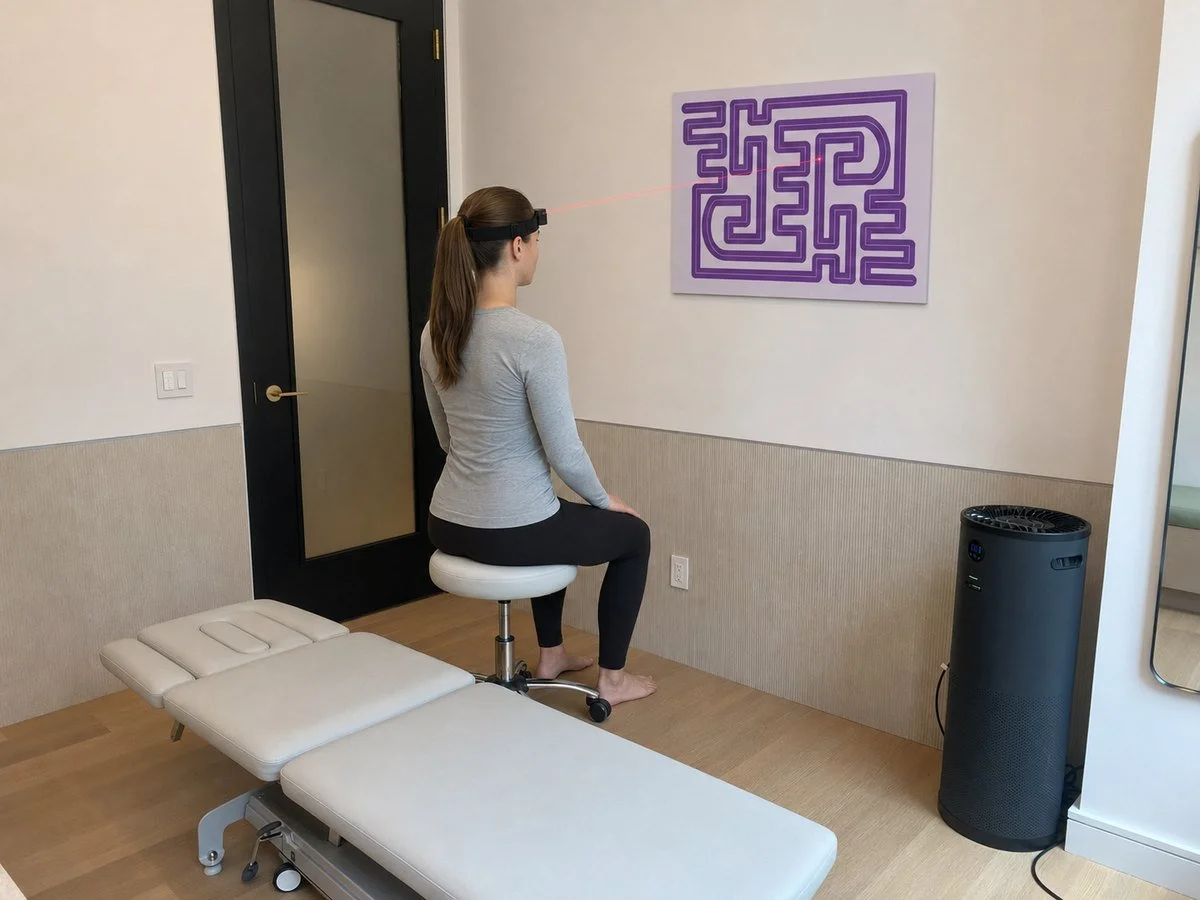
Laser Tracking
- With the head-mounted laser on, sit tall facing the wall chart at eye level.
- Move your head to guide the laser dot slowly along the path, staying inside the lines.
- Lead with smooth, small head movements, not your eyes alone. Keep the neck relaxed.
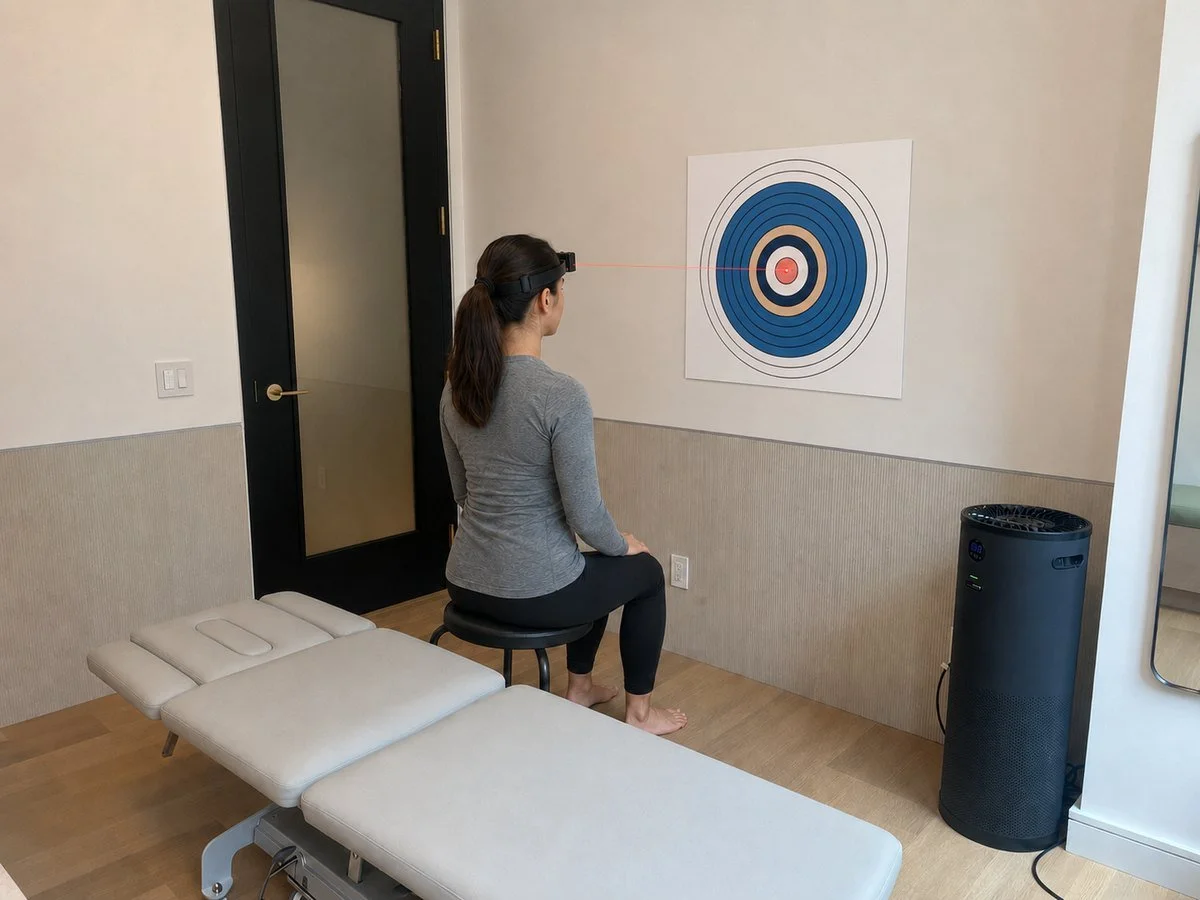
Laser Relocation
- Sit tall facing the target, laser dot resting on the centre. This is your neutral.
- Close your eyes, turn the head smoothly to one side, then return to where you believe centre is.
- Open your eyes and see how close the dot landed. Repeat each side and up and down.
A calibrated relocation target plus tracking paths, ordered easiest to hardest. Print at actual size, 100 percent, no scaling.
A quick safety note
This program is for common, mechanical neck stiffness and soreness. If your neck pain follows a significant injury, or comes with arm pain, numbness, weakness, dizziness, or trouble with balance or swallowing, do not start these exercises. Let us assess you first and point you to the right starting place.
The full Phase 1 booklet
The complete Calm and Activate program as a printable PDF, including the two sensorimotor laser targets and a graduation self-check.
- All six movements with cues and reps
- Two printable laser targets, print at actual size
- A simple safety self-check
- Clear signs for when to progress to Phase 2
Enter your details just below and we will email you the PDF right away.